The Difference Between Capacity, Allocation and Utilisation
It’s a good follow-on because it turns one of ProjectFiles’ core resource-control ideas into a simple educational piece.
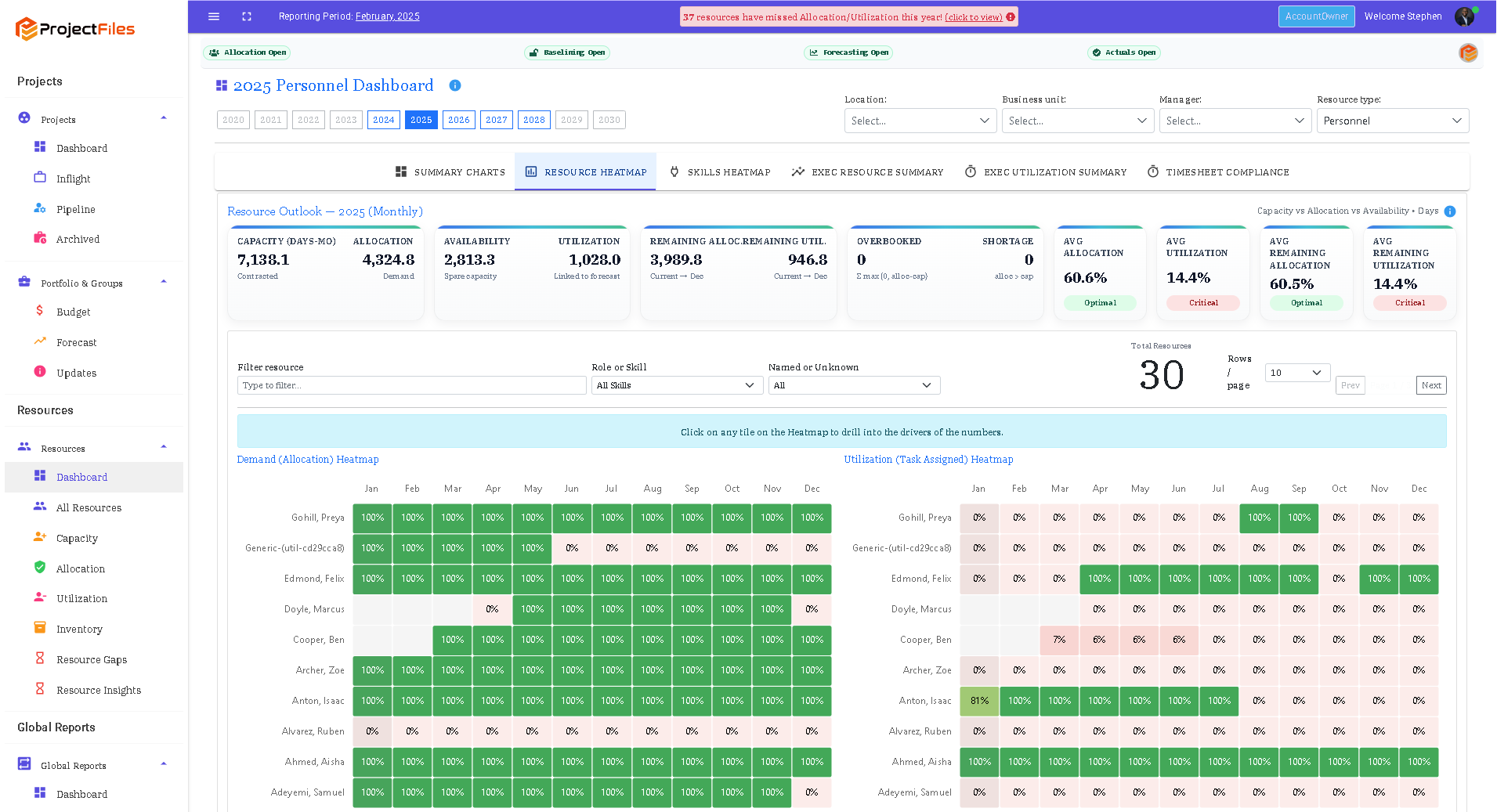
ProjectFiles shows capacity, allocation and utilisation together so resource conflicts can be identified before they affect delivery.
The Difference Between Capacity, Allocation and Utilisation
Capacity, allocation and utilisation are often used as if they mean the same thing.
They do not.
Understanding the difference matters because confusing them can create false confidence about resource availability.
Capacity
Capacity is what a resource has available.
If someone has 160 working hours in a month, that is their total capacity before other commitments are considered.
Capacity answers:
How much can this resource potentially do?
Allocation
Allocation is the portion of capacity that has been committed to particular work.
If 80 hours are committed to Project A and 40 hours to Project B, then 120 hours of the 160-hour capacity has been allocated.
That leaves 40 hours available for other work, assuming it is not required for BAU, leave or other commitments.
Allocation answers:
How much of this resource have we committed, and where?
Utilisation
Utilisation is how much of that capacity is actually being used through planned or recorded work.
A person may be allocated 80% to a project but only have enough planned work to use 50% of their capacity.
That difference matters.
It can mean the allocation is too high, the plan is incomplete, work has moved, or capacity could be released elsewhere.
Utilisation answers:
How much of the committed capacity is actually being used?
Why the distinction matters
Imagine a resource has:
160 hours capacity;
128 hours allocated;
80 hours of actual planned assignments.
On paper, that person is 80% allocated.
But their utilisation is only 50% of total capacity.
If you only look at allocation, they appear almost fully committed.
If you only look at utilisation, they may appear underused.
You need both views to understand what is really happening.
The common mistake
Many organisations jump directly from capacity to project planning.
A project manager sees someone with apparent availability and assigns work.
But that person may already be committed elsewhere.
This is where conflicts begin.
A stronger sequence is:
Capacity → Allocation → Assignment → Utilisation
Each stage acts as a control point.
Capacity shows what exists.
Allocation shows what has been committed.
Assignments show what work is planned.
Utilisation shows whether that commitment is actually being used.
Why BAU matters too
A resource should not appear available to projects just because non-project work has been ignored.
If someone spends 40% of their time on BAU, that capacity should be represented.
Otherwise the project portfolio is planning against capacity that does not really exist.
A practical rule is simple:
Every resource should be allocated somewhere — project work, BAU or other recognised commitments.
That makes the remaining capacity meaningful.
What good resource governance looks like
A strong portfolio should be able to answer:
What capacity is available?
What has already been allocated?
Which projects are consuming it?
Where are there conflicts?
Where is allocated capacity not being used?
Where are future shortages appearing?
Once those answers are visible, resource decisions become much easier.
The key takeaway
Capacity, allocation and utilisation are three different views of the same resource.
Confusing them leads to weak planning.
Connecting them gives the organisation a much clearer picture of what it can realistically deliver.
Put stronger resource controls into practice
ProjectFiles connects capacity, allocation, project assignments and utilisation in one governed environment.
Clarity. Control. Confidence.
Numbers that hold up when challenged.