Why Project Plans and Financial Forecasts Should Never Drift Apart
It follows perfectly from the capacity/allocation/utilisation article and ties delivery planning directly to cost control.
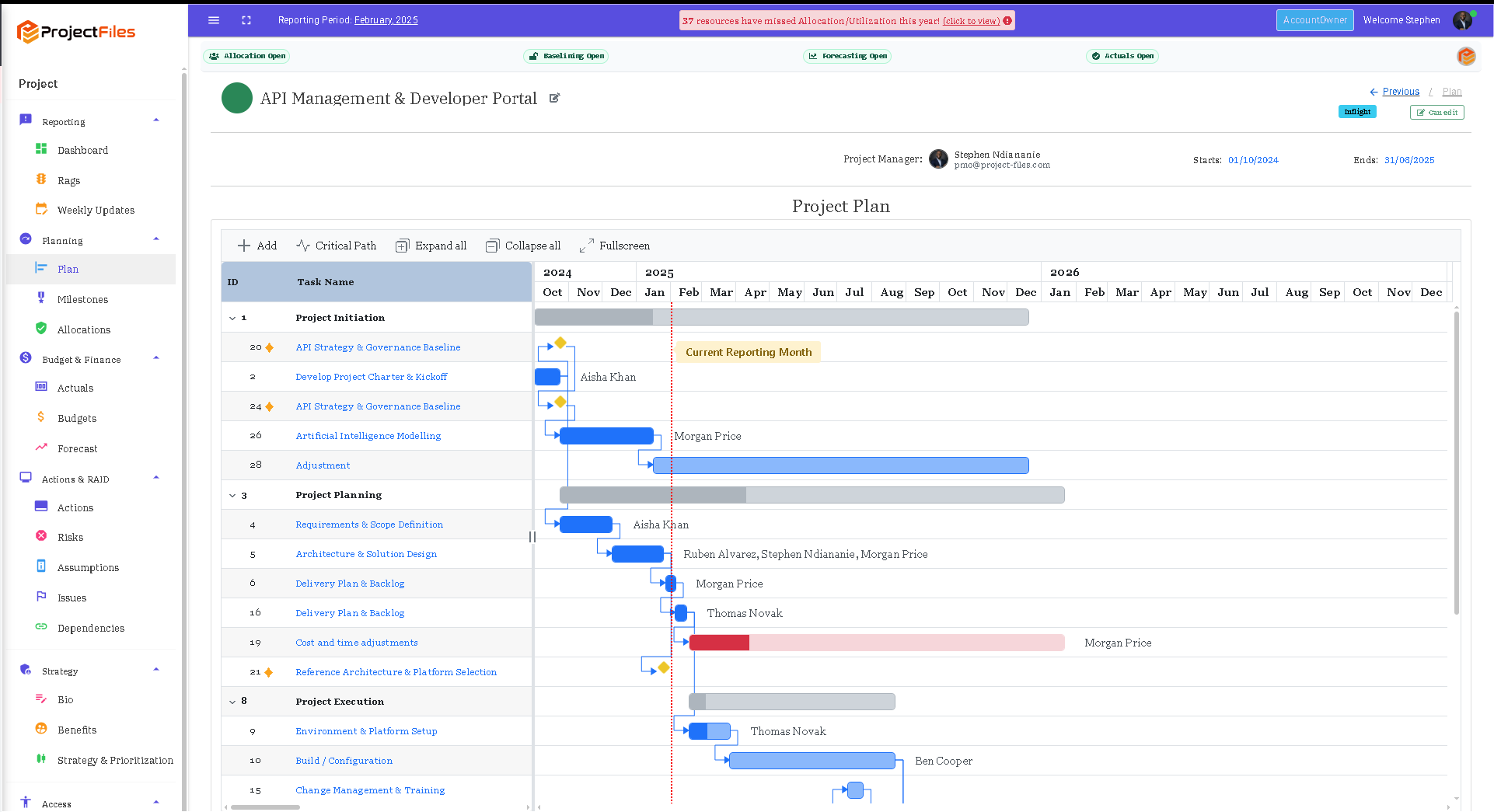
A project plan sample in ProjectFiles
Why Project Plans and Financial Forecasts Should Never Drift Apart
A project plan and a financial forecast are supposed to describe the same future.
One explains what work is expected to happen.
The other explains what that work is expected to cost.
When they drift apart, confidence in both starts to fall.
A project may still look on track operationally while the financial forecast is out of date. Or the forecast may have been changed without the delivery plan being updated to explain why.
That is where unreliable reporting begins.
A plan change should affect the forecast
If project timing moves, cost timing often moves with it.
If resources are added, removed or replaced, the cost forecast should reflect that.
If scope changes, the remaining work and expected spend should change too.
The problem is that many organisations manage these updates in separate tools.
The project plan may sit in one system.
The financial forecast may sit in Excel.
Resource allocations may sit somewhere else.
Each source can be individually correct and still produce an unreliable overall picture.
The common failure
Imagine a workstream slips by two months.
The project plan is updated.
But the forecast still shows the original spend profile.
At the next portfolio review, the project is effectively showing two different futures:
the delivery view says the work happens later;
the financial view says the money is still spent now.
That creates avoidable questions, unexplained variances and poor decision-making.
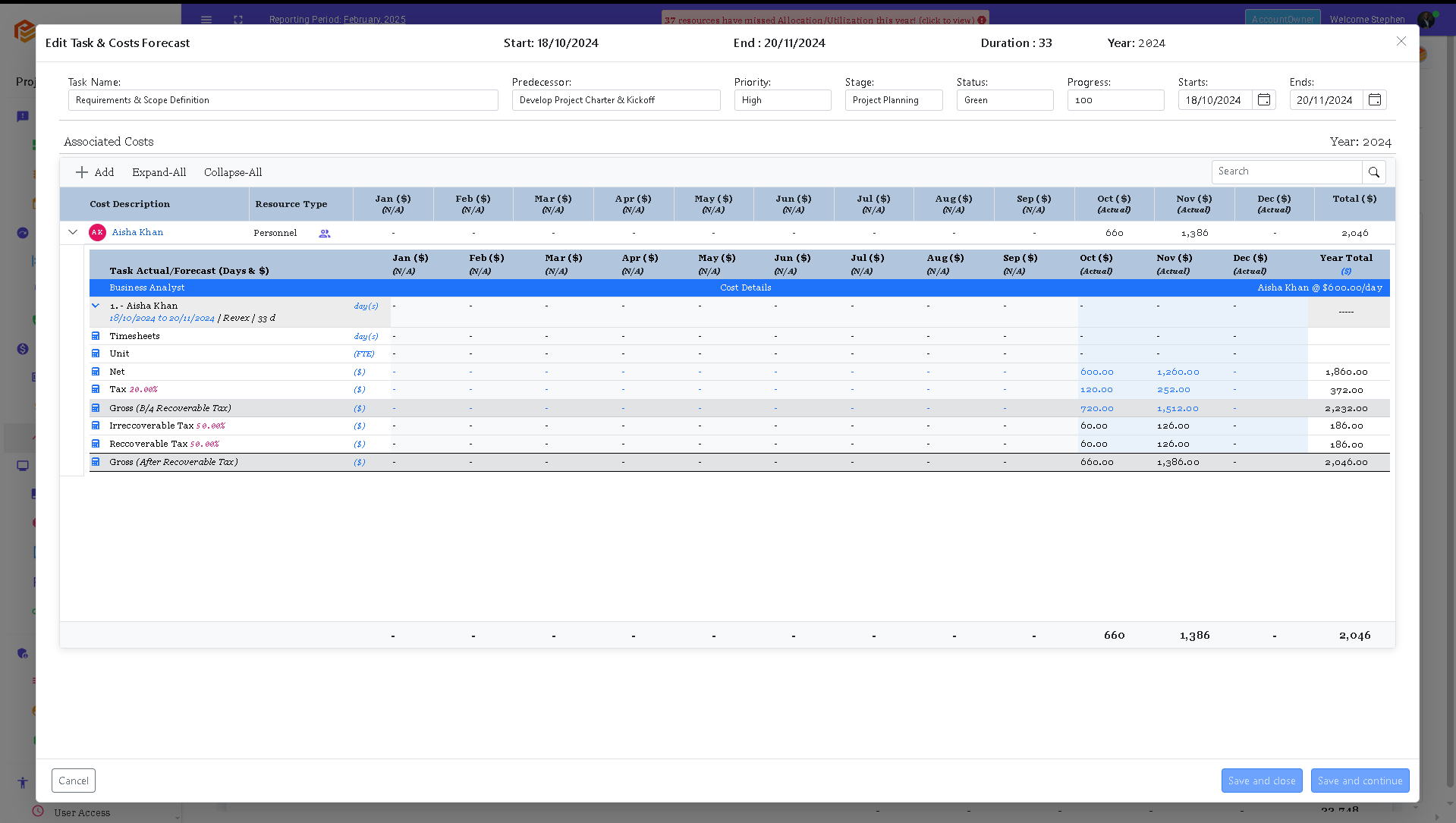
A resource task and cost breakdown in ProjectFiles
Resource changes create the same problem
Financial forecasts are often heavily driven by resources.
If someone is removed from the project, replaced, delayed or extended, the forecast should respond.
This is why resource allocation, project assignments and financial forecasting should be connected.
A stronger control sequence is:
Allocation → Assignment → Forecast
If the assignment changes, the forecast should change with it.
Actuals should then challenge both
Once actual performance arrives, both the plan and forecast should be reassessed.
If work took longer than expected, what happens to the remaining plan?
If more cost was incurred than expected, does the remaining forecast change?
If less work was completed than planned, should future resource demand move?
Reconciliation should not stop at explaining the difference.
It should correct the future.
One future, not two
The strongest project control environments treat the plan and forecast as two views of the same commitment.
The delivery plan says what remains to be done.
The forecast translates that remaining work into expected financial impact.
When one changes, the other should be reviewed.
That does not mean every small planning adjustment requires a formal financial approval.
It means material changes should not be allowed to exist in one view and disappear from the other.
The practical rule
At every monthly review, ask:
Does the current plan still support the current forecast?
Do the resource assignments match what is being costed?
Have timing changes moved the spend profile?
Have actuals changed the remaining delivery assumptions?
Can material forecast changes be traced back to a delivery reason?
If the answer is no, the project is probably carrying two different versions of the future.
The key takeaway
Reliable project control depends on alignment between delivery and finance.
A forecast should not be a number maintained separately from the plan.
It should be the financial expression of the remaining work.
When plans and forecasts stay connected, project reporting becomes easier to explain, easier to challenge and much easier to trust.
Put stronger project controls into practice
ProjectFiles connects resource allocation, project planning, financial forecasting, actuals and monthly governance in one controlled environment.
Clarity. Control. Confidence.
Numbers that hold up when challenged.