How Can I Spot Staffing Conflicts Before I Commit People to Several Projects at the Same Time?
Staffing conflicts rarely appear out of nowhere.
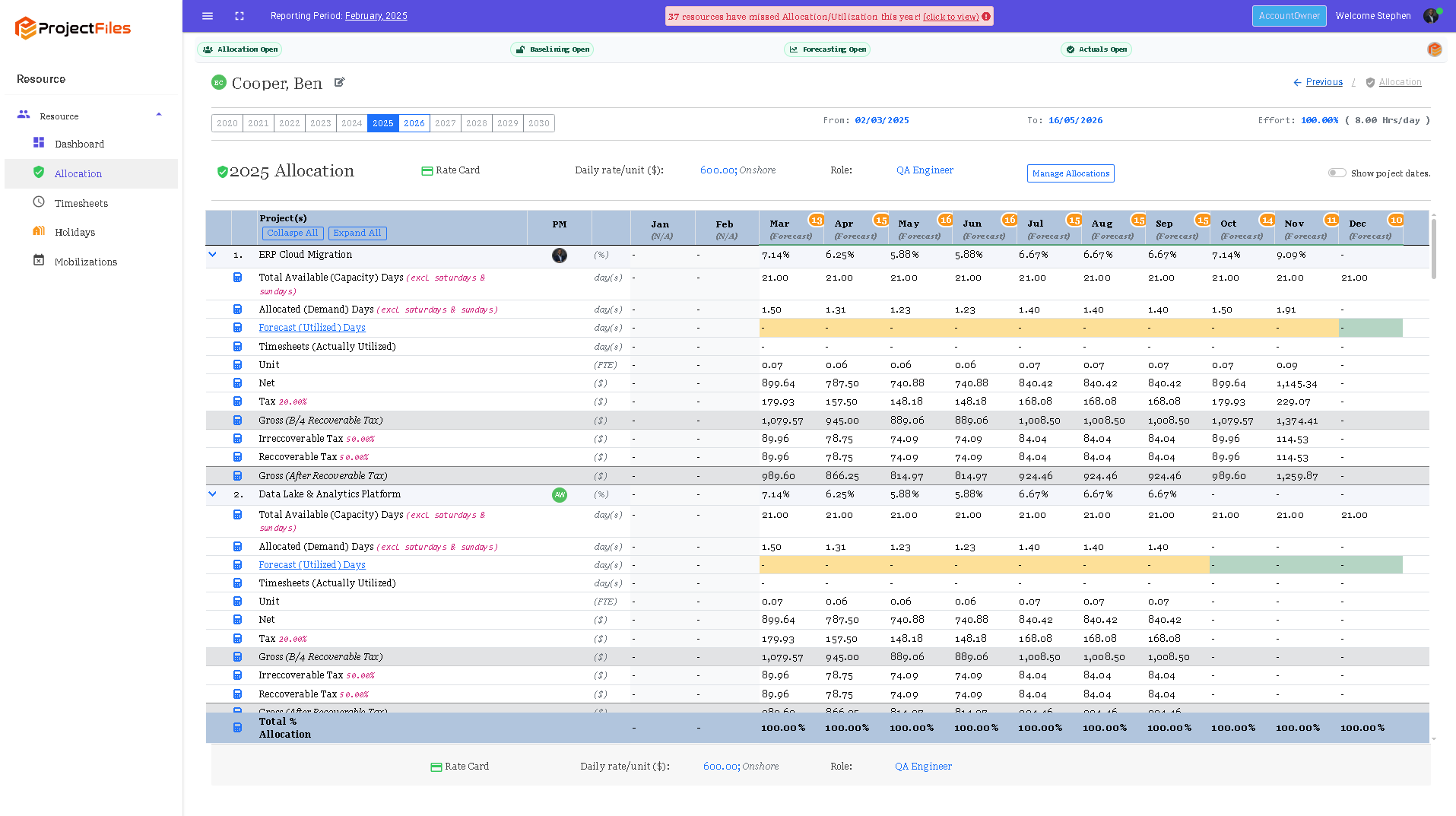
Resource capacity view showing staffing conflicts and competing allocations across multiple projects
Most of the time, they were visible much earlier.
The problem is that the warning signs were sitting in different project plans, spreadsheets or conversations, so nobody could see the full picture.
One project needs the business analyst in March.
Another needs the same person in March.
A third project assumes they will be available too.
Individually, every plan looks reasonable.
Together, they do not fit.
That is why staffing conflicts should be spotted before assignment, not after people become overloaded.
Start with real capacity
The first question is simple:
How much time does this person actually have available?
Not theoretical capacity.
Real capacity.
That means accounting for:
leave;
BAU work;
existing project commitments;
training;
management responsibilities; and
part-time working.
If someone has 20 working days next month but 8 are already committed elsewhere, you do not have 20 days to allocate.
You have 12.
That sounds obvious, but this is where many staffing problems begin.
Look across every project at the same time
A staffing conflict is usually a portfolio problem.
If every project manager only sees their own project, the same person can quietly be promised several times.
Think of it like selling the same theatre seat to three people.
Each person has a perfectly valid-looking ticket.
The problem only becomes obvious when they all arrive.
The same is true with resource planning.
You need one view showing all commitments by person, role and month.
Separate allocation from assignment
This is one of the most useful controls.
Allocation answers:
How much of this person's capacity has been committed to this project?
Assignment answers:
What work are they actually expected to perform?
The allocation should come first.
A project should not simply start assigning work because somebody appears in the resource pool.
A stronger control is:
Capacity → Allocation → Assignment
That makes it much harder to accidentally commit the same capacity several times.
Look for the conflict before it reaches 100%
Do not wait until somebody is technically overallocated.
Warning signs appear earlier.
For example, someone may be allocated:
50% to Project A;
30% to Project B;
20% to BAU.
That is already 100%.
Then Project C asks for another 20%.
The conflict is obvious if everything is visible together.
But there is another warning sign too.
If somebody is repeatedly sitting at 95–100% allocation for months, there is almost no room for:
unexpected work;
sickness;
project overruns;
support requests; or
changes in priority.
A plan can be mathematically possible and still be operationally fragile.
Use roles and placeholders before names
Sometimes the staffing conflict is not about one named person.
It is about a scarce skill.
You may have five projects needing:
Senior Business Analyst — April
but only three people with that capability.
If every project waits until it knows the person's name before recording demand, the shortage stays hidden.
Use placeholder demand instead.
That lets the portfolio see:
Demand: 5
Available capacity: 3
Gap: 2
Now you have time to do something about it.
Look ahead several months
Resource conflicts are much easier to solve three months before they happen.
You can:
move project dates;
change priorities;
recruit;
contract;
adjust scope;
release capacity elsewhere; or
sequence projects differently.
Three days before the conflict, your choices are usually much worse.
That is why staffing visibility should extend beyond the current month.
A monthly heatmap or capacity view can quickly expose where the red zones are forming.
Priorities should decide who gets the resource
When two projects genuinely need the same person at the same time, somebody has to make a decision.
That decision should not depend on which project manager asks first.
It should depend on portfolio priority.
A strong sequence is:
Prioritisation → Capacity → Allocation → Assignment
That means scarce people go to the work the organisation has deliberately decided matters most.
A simple staffing conflict test
Before committing someone to a project, ask:
What is their real capacity for that period?
What has already been allocated?
What BAU commitments exist?
What other projects are requesting them?
Is the requirement for this person or simply their skill?
What does their allocation look like over the next 3–6 months?
Which project has priority if there is a conflict?
If you cannot answer those questions quickly, the resource probably should not be committed yet.
The key takeaway
The best time to solve a staffing conflict is before anyone has been assigned.
See capacity across the portfolio.
Record demand early.
Allocate before assigning.
Use placeholders where names are not known.
And let priorities determine where scarce capacity goes.
That is how you move from resource firefighting to resource control.
Spot resource conflicts before they reach delivery
ProjectFiles brings capacity, allocation, placeholders, assignments and utilisation into one portfolio view so teams can see competing demand before committing resources.
Clarity. Control. Confidence.
Numbers that hold up when challenged.