What Is Project Portfolio Management (PPM) — and How Is It Different From Project Management?
Project management and project portfolio management are closely related, but they are not the same thing.
Project portfolio management dashboard showing projects resources financial forecasts and portfolio governance
A simple way to think about it is this:
Project management is about driving one car well.
Project portfolio management is about managing the whole fleet — deciding which cars should be on the road, where they are going, who gets the fuel, and whether the journey is still worth making.
That distinction matters.
An organisation can manage individual projects well and still have a portfolio that is overloaded, underfunded or pulling in too many directions.
Project management asks: are we delivering this project well?
At project level, the focus is usually on:
scope;
schedule;
resources;
cost;
risks;
issues;
dependencies; and
delivery outcomes.
The project manager is trying to get the agreed work done properly, on time and within budget.
That is essential.
But it is only one part of the picture.
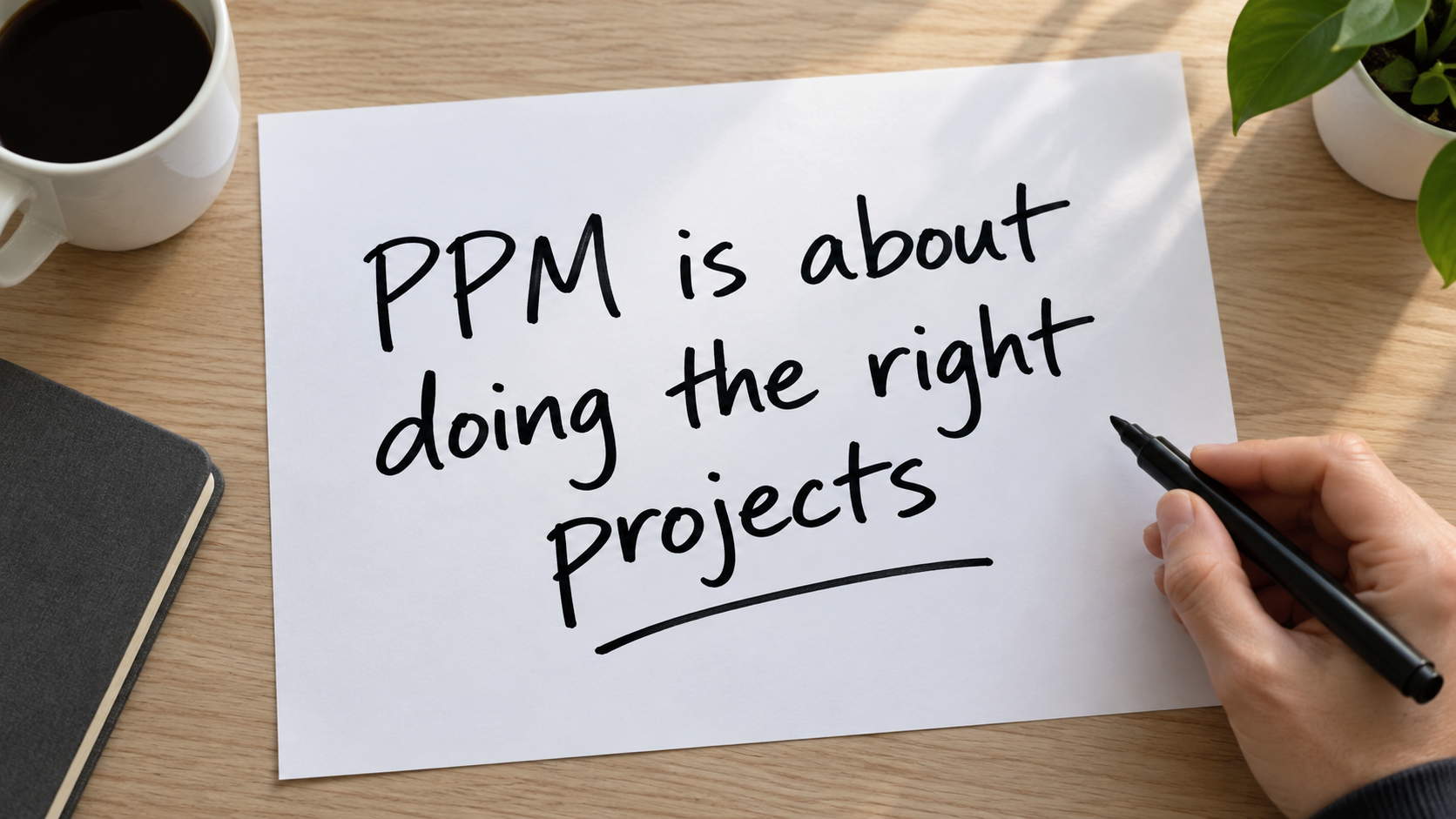
PPM asks: are we doing the right projects in the first place?
At portfolio level, the questions change.
Which projects should we approve?
Which should wait?
Which are most important to the strategy?
Do we actually have the people to deliver them?
Which projects should get scarce resources first?
What is the total financial exposure?
Are the expected benefits still worth it?
This is where things become very human.
Every organisation has more ideas than time, more demand than capacity, and usually more people asking for resources than there are resources available.
PPM helps turn that tension into a decision-making process instead of a monthly argument.
Why organisations need both
Imagine 30 projects are running at the same time.
Each project manager has a plan.
Each has a budget.
Each may even be reporting green.
But then five projects all need the same specialist next month.
Individually, every plan looks reasonable.
Together, they do not fit.
It is like five families all assuming they can use the same car at 8am.
Nothing is wrong with any one plan. The problem is the combined demand.
That is the portfolio view.
PPM connects strategy to delivery
A strong portfolio process starts before execution.
Potential projects should be assessed against things like:
strategic alignment;
expected value;
cost;
risk;
resource demand;
urgency; and
available capacity.
Projects can then move through a prioritisation process before being approved.
That helps stop organisations from committing to more work than they can realistically deliver.
PPM is also about resource capacity
A project manager asks:
Who do I need for my project?
A portfolio or resource manager asks:
How should limited capacity be shared across all projects?
That is a very different question.
It requires visibility across the organisation, not just within one project.
Capacity has to be compared with demand.
Allocation has to reflect priorities.
Overcommitment has to be visible before people become the bottleneck.
Financial control matters too
Senior leaders also need to understand the combined financial picture.
They need to see:
budgets;
forecasts;
actual spend;
forecast changes;
expected final cost; and
overall portfolio exposure.
The important thing is that those numbers should not be stitched together at the last minute from a collection of spreadsheets.
They should roll up from controlled project information underneath.
Project management optimises delivery. PPM optimises investment.
That is the simplest way I think about it.
Project management:
Are we delivering this project properly?
Project portfolio management:
Are we investing in the right work, at the right time, with the money and people we actually have?
You need both.
Without project management, individual projects struggle.
Without PPM, the organisation can become very efficient at delivering the wrong things.
What good PPM looks like
A strong portfolio environment connects:
Strategy → Prioritisation → Capacity → Allocation → Planning → Forecast → Actuals → Governance → Benefits
That gives leaders a clear line of sight from why a project exists to what it is costing and whether it is still worth doing.
And ultimately, that is what good PPM should help answer:
Can we confidently deliver what we have committed to?
Put stronger portfolio controls into practice
ProjectFiles connects project prioritisation, resource capacity, allocation, planning, financial forecasting, actuals and portfolio governance in one controlled environment.
Clarity. Control. Confidence.
Numbers that hold up when challenged.