How to Do Resource Capacity Planning Across Multiple Projects
Resource capacity planning sounds technical, but the basic problem is very human:
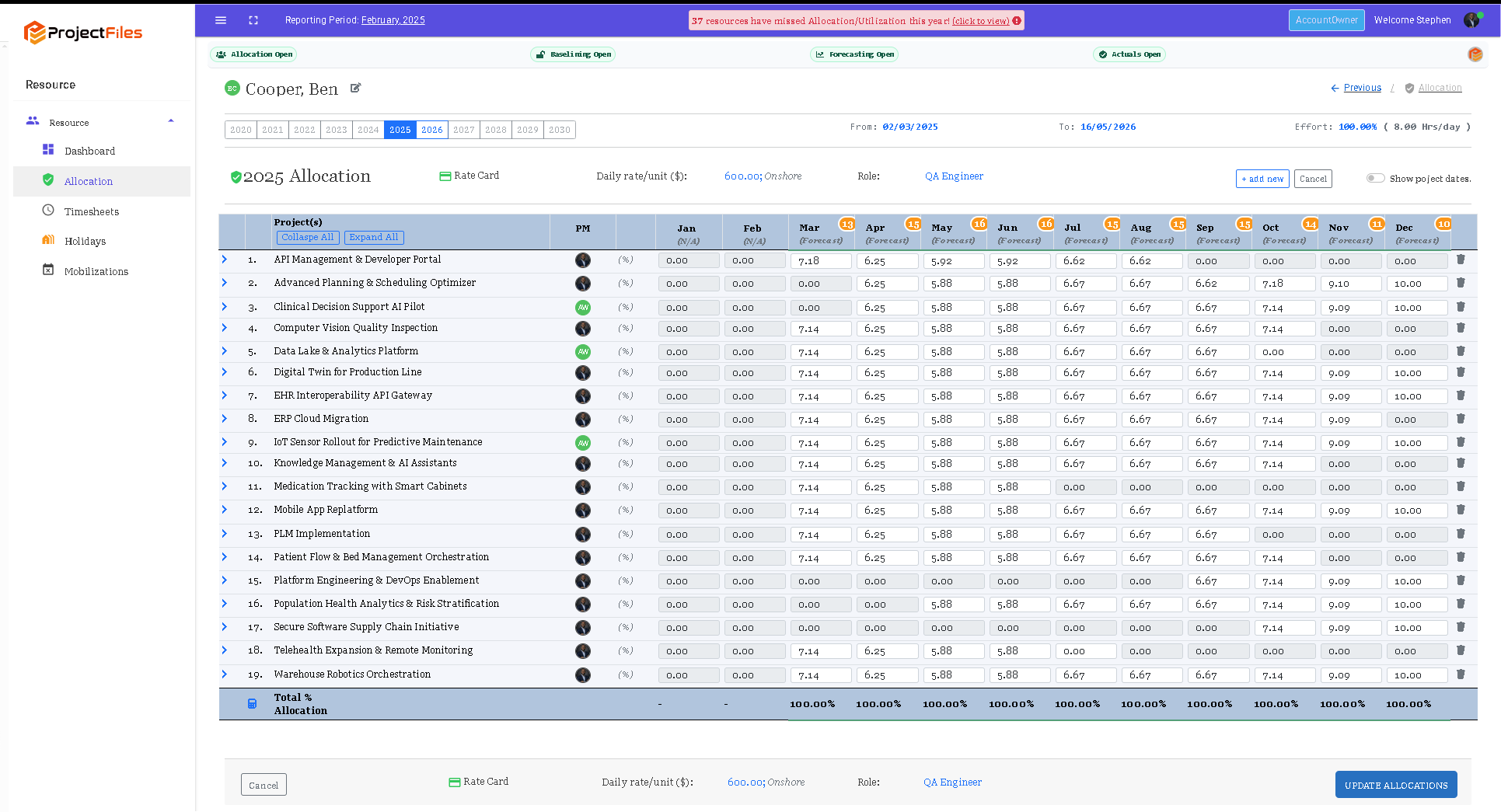
Resource capacity planning across multiple projects showing allocation and remaining availability
Too much work. Not enough people. Too many assumptions.
Most organisations do not run out of ideas.
They run out of capacity.
And when several projects are competing for the same people, the problem is not usually that nobody planned.
It is that everyone planned separately.
Start with what you actually have
Capacity planning should begin with a simple question:
How much usable capacity do we really have?
Not theoretical capacity.
Not “40 hours a week multiplied by everyone on the payroll”.
Real capacity.
That means accounting for:
BAU responsibilities;
leave;
training;
management time;
part-time working;
existing project commitments; and
other non-project work.
If you ignore those things, you are planning with capacity that does not actually exist.
It is a bit like budgeting with money that is already spoken for.
Then look at demand across all projects
The next step is to see what every project is asking for.
One project may need a business analyst.
Another may need the same analyst at the same time.
A third may need the same skill but has not named the person yet.
Individually, every request can look reasonable.
Together, they may be impossible.
This is why capacity planning has to be done across the portfolio, not project by project.
Separate capacity from allocation
Capacity tells you what is available.
Allocation tells you what has been committed.
That distinction matters.
If someone has 20 available days next month and 15 have already been allocated, only 5 remain.
A project manager should not see 20 days and assume all 20 are available to them.
A stronger sequence is:
Capacity → Allocation → Assignment
That creates a control point before detailed project planning starts.
Use placeholders where you do not yet know the name
Sometimes you know the work needs a senior developer, engineer or analyst, but you do not yet know who will do it.
That is normal.
Do not hide the demand.
Use a placeholder.
A placeholder tells the organisation:
We need this capability, even though we have not filled it yet.
That makes shortages visible much earlier.
And early visibility is the whole point of capacity planning.
Let priorities influence allocation
When demand is greater than capacity, something has to give.
The answer should not be:
Who shouted loudest?
Allocation should reflect portfolio priorities.
If two projects need the same scarce resource, the organisation should be able to decide which work matters more and allocate accordingly.
That is portfolio governance in practice.
Look ahead, not just at this month
Good capacity planning is not only about today.
A resource conflict in three months is much easier to solve now than three days before it happens.
A useful forward view should show:
current capacity;
committed allocation;
remaining availability;
future shortages;
overcommitment; and
unfilled demand.
That gives leaders time to recruit, contract, reschedule, reduce scope or change priorities.
Keep allocation connected to delivery
Capacity planning should not stop once somebody is allocated.
The next question is:
Is that allocation actually being used?
If someone is allocated 80% to a project but the delivery plan only uses 40%, there is a gap.
That could mean the plan is incomplete, the allocation is too high, or capacity could be released.
This is where allocation and utilisation need to be reviewed together.
The key takeaway
Resource capacity planning is not really about filling a spreadsheet with percentages.
It is about making realistic promises.
Know what capacity you have.
See what the portfolio is demanding.
Allocate it deliberately.
Expose the gaps early.
And do not let projects plan against resources that have never actually been committed.
That is how you move from resource firefighting to resource control.
Put stronger resource planning into practice
ProjectFiles connects capacity, allocation, placeholders, project assignments and utilisation across the portfolio in one governed environment.
Clarity. Control. Confidence.
Numbers that hold up when challenged.