What Is PMO Governance? A Practical Guide to Better Portfolio Control
PMO governance can sound heavier than it needs to be.
PMO governance connecting project priorities resources financial control approvals and decisions
In simple terms, it is about making sure projects are not just moving, but moving with enough control that leaders can trust the position.
Without governance, a portfolio can look busy but still be hard to manage.
Projects get approved without enough capacity.
Forecasts change without clear ownership.
Risks sit in reports without decisions.
Actuals arrive, but nobody is sure what should happen next.
That is where PMO governance matters.
Governance is not bureaucracy for the sake of it
Good governance is not about adding more meetings.
It is about creating clear rules around important decisions.
Things like:
which projects get approved;
who owns the forecast;
when changes need approval;
how risks are escalated;
when a period is closed;
and who is accountable for the final position.
Think of it like road markings.
You do not notice them much when they are working.
But remove them, and very quickly everyone starts making up their own rules.
A PMO should create one version of control
The PMO should help the organisation answer:
What is the current position, and can we trust it?
That means bringing together:
project status;
resource capacity;
allocation;
financial forecasts;
actuals;
risks and issues;
approvals; and
decisions.
If each of those sits in a different spreadsheet with a different owner and a different reporting date, governance becomes difficult.
The PMO ends up collecting information instead of controlling it.
Governance should happen before, during and after execution
Strong PMO governance starts before a project begins.
Projects should pass through prioritisation and approval before they consume scarce resources.
During execution, the PMO should help ensure that plans, forecasts, actuals and decisions stay connected.
After execution, governance should continue through benefits review, close-out and lessons learned.
So the real flow is wider than delivery:
Prioritise → Approve → Deliver → Control → Close → Review Benefits
That is what makes governance a lifecycle, not a monthly reporting exercise.
Resource governance is part of PMO governance
It is difficult to govern a portfolio if project teams are competing for the same people without a clear allocation process.
Capacity should be visible.
Allocations should reflect priorities.
Over-commitment should be surfaced early.
If a project has not secured the capacity it needs, that should be visible before the plan is treated as committed.
This is where governance becomes practical rather than theoretical.
Financial governance matters just as much
The PMO also needs a controlled way to manage the financial position.
A good process should make it clear:
what was approved;
what is currently forecast;
what has actually been spent;
what changed;
why it changed; and
who approved the new position.
The numbers should not just exist.
They should have a story behind them.
Decisions are part of governance too
One of the most overlooked parts of PMO governance is decision capture.
A project can change direction because of a sponsor decision, a resource constraint, a risk response or a funding choice.
If those decisions are not recorded, people later remember the outcome but forget the reason.
Good governance keeps the “why” attached to the “what”.
That makes future reporting much easier to defend.
The key takeaway
PMO governance is not about slowing projects down.
It is about making sure the organisation knows what it has committed to, what has changed, and who is accountable for the current position.
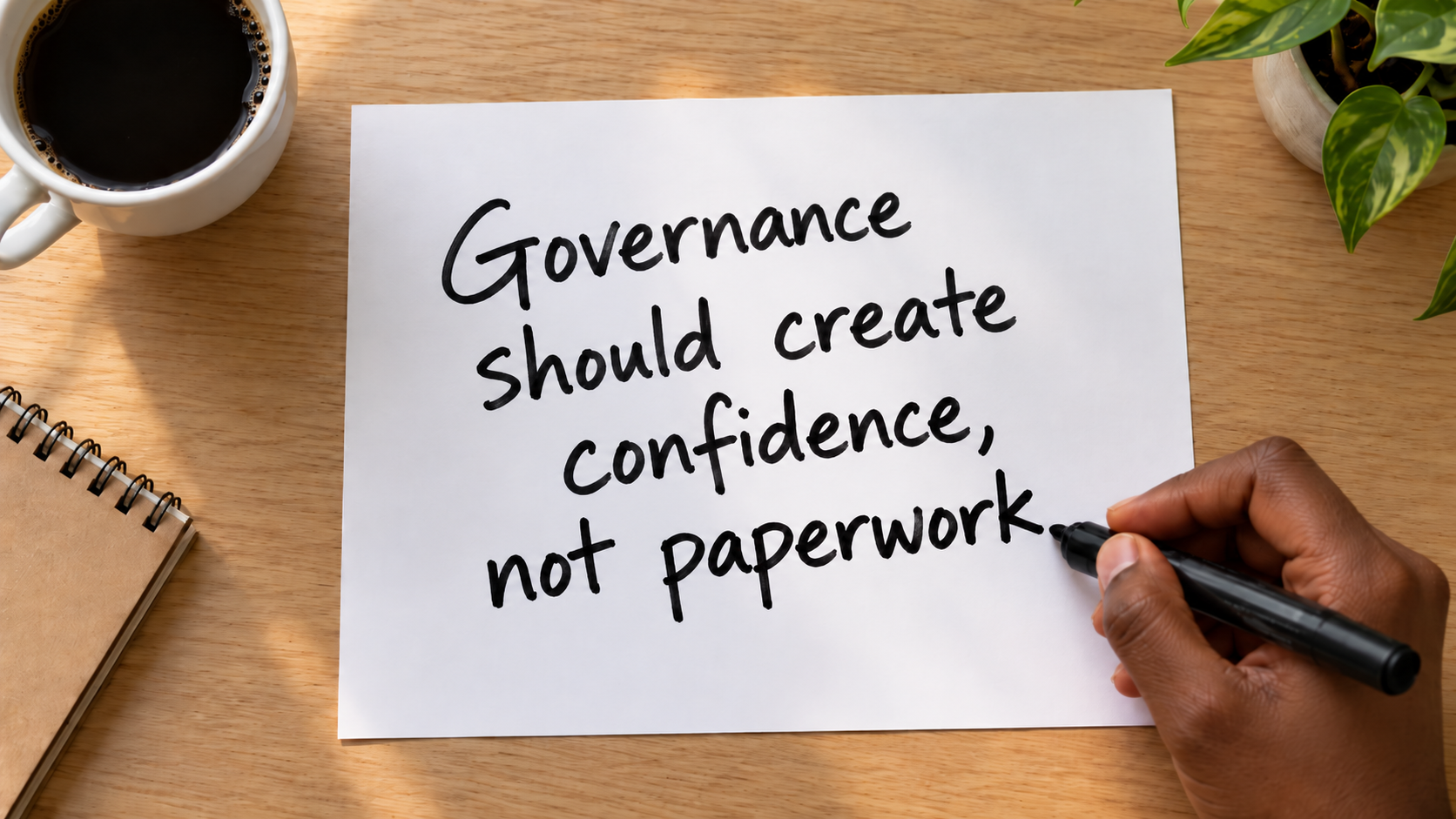
Done well, governance gives leaders confidence without drowning teams in process.
That is the balance.
Put stronger PMO governance into practice
ProjectFiles connects prioritisation, resource control, financial forecasting, approvals, decisions and portfolio governance in one controlled environment.
Clarity. Control. Confidence.
Numbers that hold up when challenged.